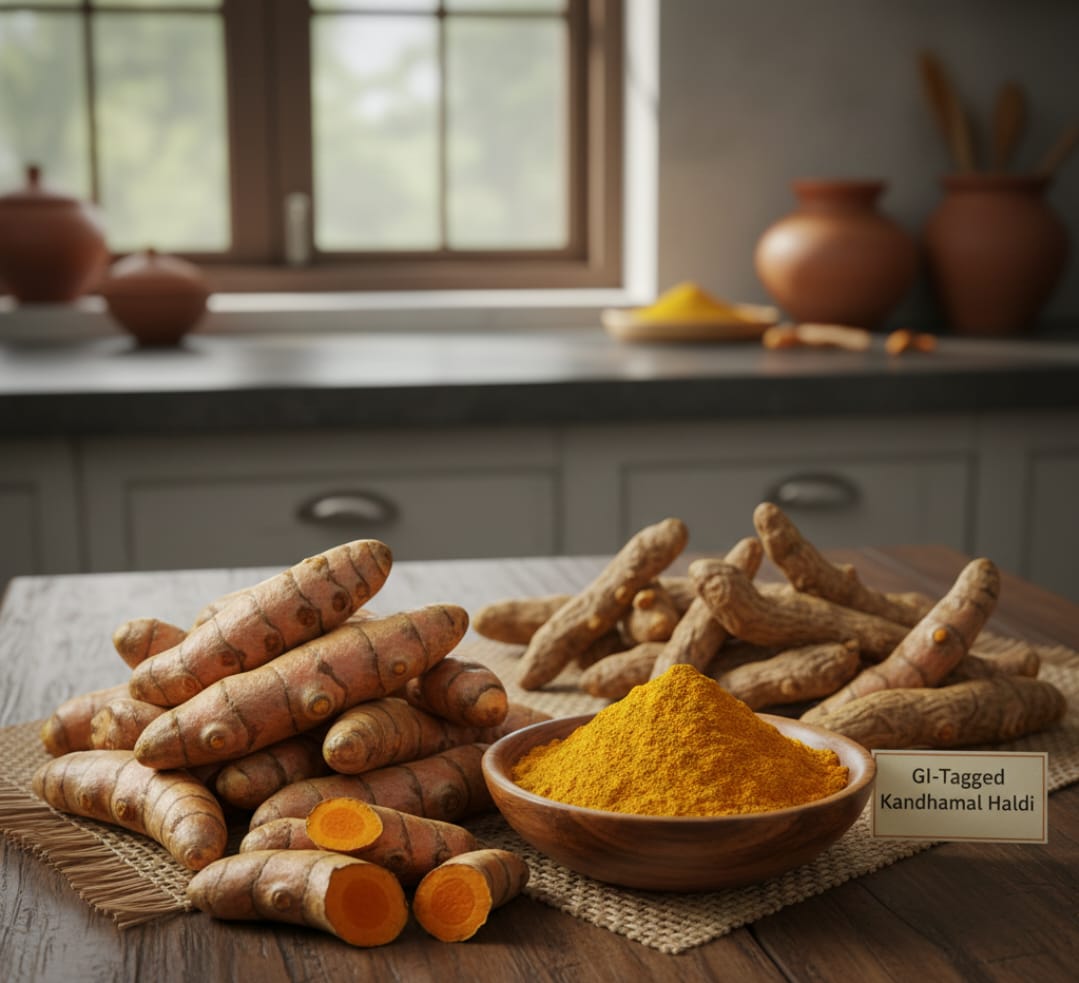
Understand turmeric varieties, regional names, GI-linked origin and product forms before comparing bulk supplier quotations.
Two suppliers can both offer “Indian turmeric” and still be quoting different products. One may mean fresh rhizomes; another may mean dried fingers or ground powder. A regional name, a named variety and a processing description answer different questions. Separating them makes a bulk buying enquiry much clearer.
Start with three separate descriptions
Ask your supplier to state the variety or commercial name, the source region, and the physical form. Then add the intended use. A spice blender, a fresh-produce distributor and a processor buying material for extraction will not necessarily need the same specification.
- Variety: the named plant material, where identified and supported by the supplier.
- Origin: where the turmeric was grown, supported by traceable records when origin matters.
- Form: fresh rhizomes, dried fingers, powder or a separately specified extract.
Named varieties are not processing grades
ICAR–Indian Institute of Spices Research lists turmeric varieties including IISR-Pragati, IISR-Kedaram, Prathibha and IISR-Alleppey Supreme. These names should not be treated as synonyms for “double polished” or “powder.” The latter describe processing or presentation, not the variety itself.
A variety name also does not replace a test report for the offered lot. If your application needs a particular curcumin measurement, ask for the parameter, test method, result and sample identification rather than relying on the name alone.
Where GI-tagged Kandhamal turmeric fits
Kandhamal Haladi is listed by APEDA among Odisha’s geographical indication products. A buyer seeking this origin should make that requirement explicit in the enquiry. “Indian turmeric” or “Odisha turmeric” alone is not enough to establish that a particular shipment is Kandhamal Haladi.
For origin-focused buying, review our Kandhamal turmeric sourcing page and request documentation for the proposed supply.
Choose the form after defining the application
Fresh turmeric may suit a buyer handling fresh produce or processing fresh rhizomes. Dried fingers can suit buyers with grinding or further-processing capability. Powder is an option when the buyer wants a ground ingredient with an agreed particle size. Extract requires its own composition and application specification; it should not be priced as an interchangeable cooking ingredient.
A better comparison sheet
Compare quotations using the same fields: product form, declared origin, quantity, packing, moisture requirement, particle size where relevant, agreed testing, destination and delivery terms. Keep unsupported descriptions such as “premium” separate from measurable acceptance criteria.
For example: “We require dried turmeric fingers for grinding, with origin documents, agreed moisture and testing requirements, packed for delivery to our destination port.” Add your actual volume and specifications before sending it.
Discuss your requirement with Jaonix
Explore our Indian turmeric export enquiry page, then send your product form, application, quantity and destination. Availability and supporting documents should be confirmed before an order is agreed.