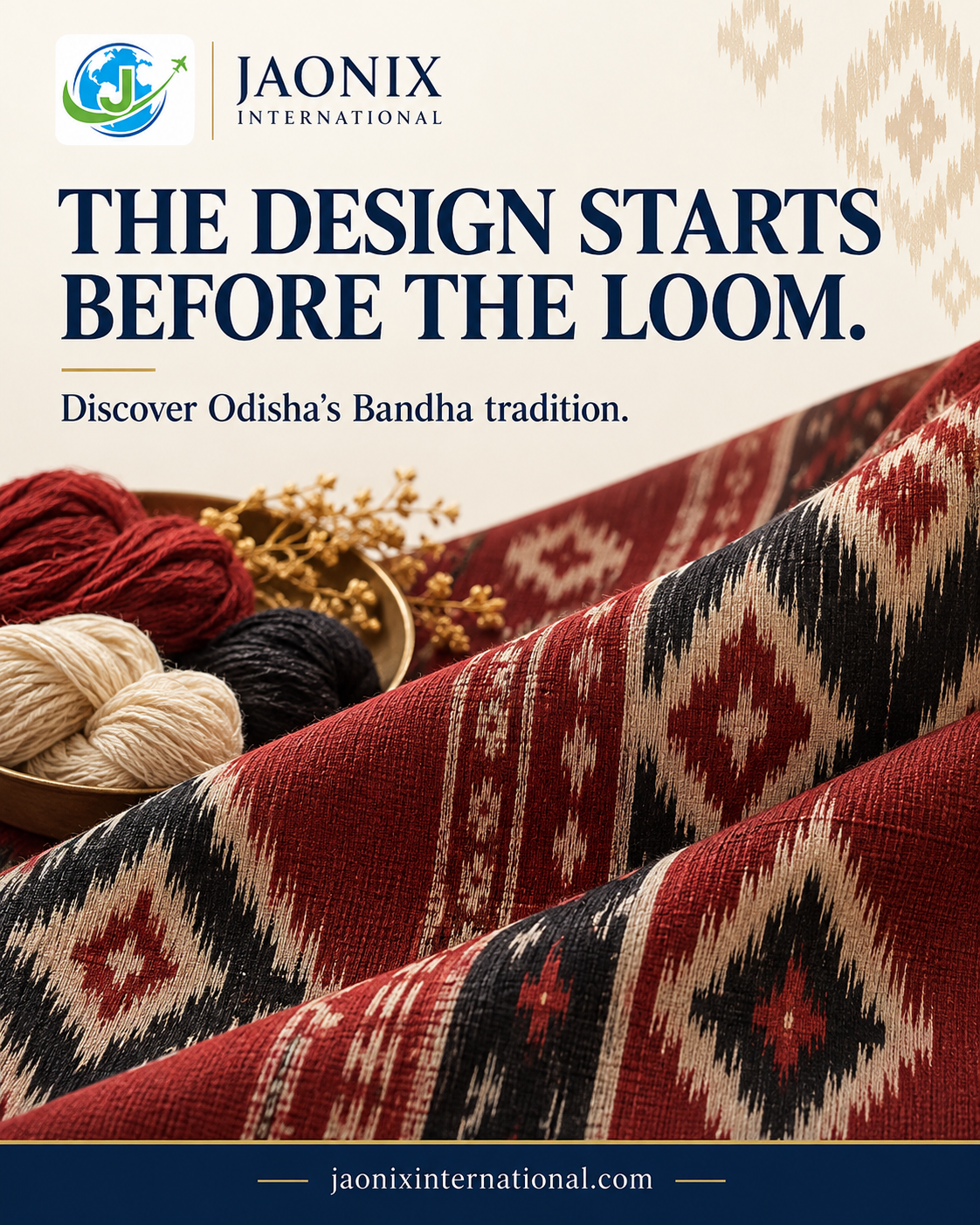
Discover how to source authentic Sambalpuri handloom sarees from Odisha for boutiques, wholesalers and international textile buyers.
Sambalpuri sarees represent one of Odisha’s most recognised handloom traditions. Their distinctive designs, carefully arranged patterns and traditional weaving identity attract saree retailers, boutiques, designers and Indian textile buyers worldwide.
For wholesale buyers, sourcing Sambalpuri sarees is not simply about selecting colours from a catalogue. Fabric, weaving technique, design complexity, production time and artisan availability can all influence the final order.
Jaonix International supports sourcing enquiries for authentic Sambalpuri handloom sarees from Odisha for boutiques, wholesalers and bulk buyers.
What Makes Sambalpuri Sarees Special?
Sambalpuri textiles are closely associated with the traditional Bandha technique, in which yarns are resist-dyed according to a planned pattern before weaving.
This process demands considerable skill because the design must be calculated and aligned before the fabric is completed. Slight variations can occur in handmade textiles and often reflect the human craftsmanship behind each piece.
“Sambalpuri Bandha Saree & Fabrics” is registered as a Geographical Indication for Odisha under handicraft classes 24 and 25.
Who Can Source Sambalpuri Sarees in Bulk?
Wholesale sourcing may be suitable for:
Saree and ethnic-wear boutiques
Textile wholesalers
Indian fashion retailers
Online clothing stores
Designers and private labels
Cultural organisations
Corporate and event-gifting buyers
International importers of Indian textiles
The most appropriate collection depends on the buyer’s price segment, target customer, preferred material and order volume.
Important Factors for Wholesale Buyers
Fabric Type
Sambalpuri sarees may be produced using cotton, silk or blended materials. Buyers should confirm the exact fabric composition before ordering because it affects appearance, comfort, maintenance and pricing.
Weaving and Design
Pattern complexity influences production time and cost. Traditional motifs, contemporary colour combinations and simpler everyday designs can serve different retail markets.
Handmade Variations
Handloom products may not have the machine-like uniformity of mass-produced fabric. Minor differences in colour or alignment should be evaluated within the accepted characteristics of handmade textiles.
Colour Requirements
Digital screens and photography can display colours differently. Buyers placing large orders should approve physical samples or clearly documented colour references whenever possible.
Saree Dimensions and Finishing
Confirm the length, width, blouse-piece inclusion, edge finishing, tassels and any other required details.
Production Lead Time
Handwoven sarees require time. Buyers planning seasonal launches, festive collections or overseas retail campaigns should place orders sufficiently in advance.
How to Verify an Authentic Handloom Product
Buyers should request clear information about:
Place of production
Fabric composition
Weaving method
Artisan or producer source
GI or handloom-related documentation, when applicable
Product photographs or videos
Sample availability
Care instructions
GI registration protects the geographical identity of Sambalpuri Bandha Saree and Fabrics, but buyers should still verify individual supplier documentation and product claims for each transaction.
Packaging for International Orders
Sarees should be folded carefully and protected from moisture, dust and unnecessary pressure. Depending on the order and buyer requirements, packaging may include:
Individual protective covers
Product labels
Style or design codes
Master cartons
Moisture-protection measures
Customised retail-ready packaging
International buyers should share any labelling, fibre-composition or country-of-origin requirements before packing begins.
Supporting Odisha’s Weaving Communities
Responsible sourcing can help traditional skills remain economically valuable to younger generations. Working through transparent sourcing channels also enables buyers to better communicate the story, origin and craftsmanship of the product to their customers.
For boutiques, this cultural context adds meaning to the collection. Customers are increasingly interested in understanding where a textile comes from, how it was created and who participated in its production.
How to Place a Wholesale Enquiry
Include the following information:
Approximate number of sarees
Preferred fabric
Target price range
Design or colour preference
Required delivery date
Destination country
Packaging requirements
Private-labelling requirements, if any
Sample requirements
Providing these details enables the supplier to suggest a more suitable collection and realistic delivery schedule.
Frequently Asked Questions
Does Jaonix International supply Sambalpuri sarees in bulk?
Yes. Jaonix International accepts sourcing enquiries from wholesalers, boutiques, retailers and other commercial buyers.
Can every saree have exactly the same design?
Availability depends on the design, yarn, artisan capacity and quantity. Handmade collections may contain acceptable variations.
Can international buyers request samples?
Sample availability, cost and courier arrangements can be discussed directly before placing a bulk order.
Is private labelling available?
Buyers may share their branding and packaging requirements for feasibility confirmation.
Source Authentic Odisha Handloom Sarees
Bring the heritage of Odisha handloom to your customers through a carefully sourced Sambalpuri saree collection.
Contact Jaonix International with your quantity, preferred fabric, target market and destination.
Email: info@jaonixinternational.com
Phone/WhatsApp: +91 7608872138
Website: https://jaonixinternational.com/